
Semaglutide6 min read
How to give your GLP-1 injection at home, step by step
Injection sites, rotation, storage, and what to do if needles make you nervous: the complete guide to taking your weekly dose with confidence.
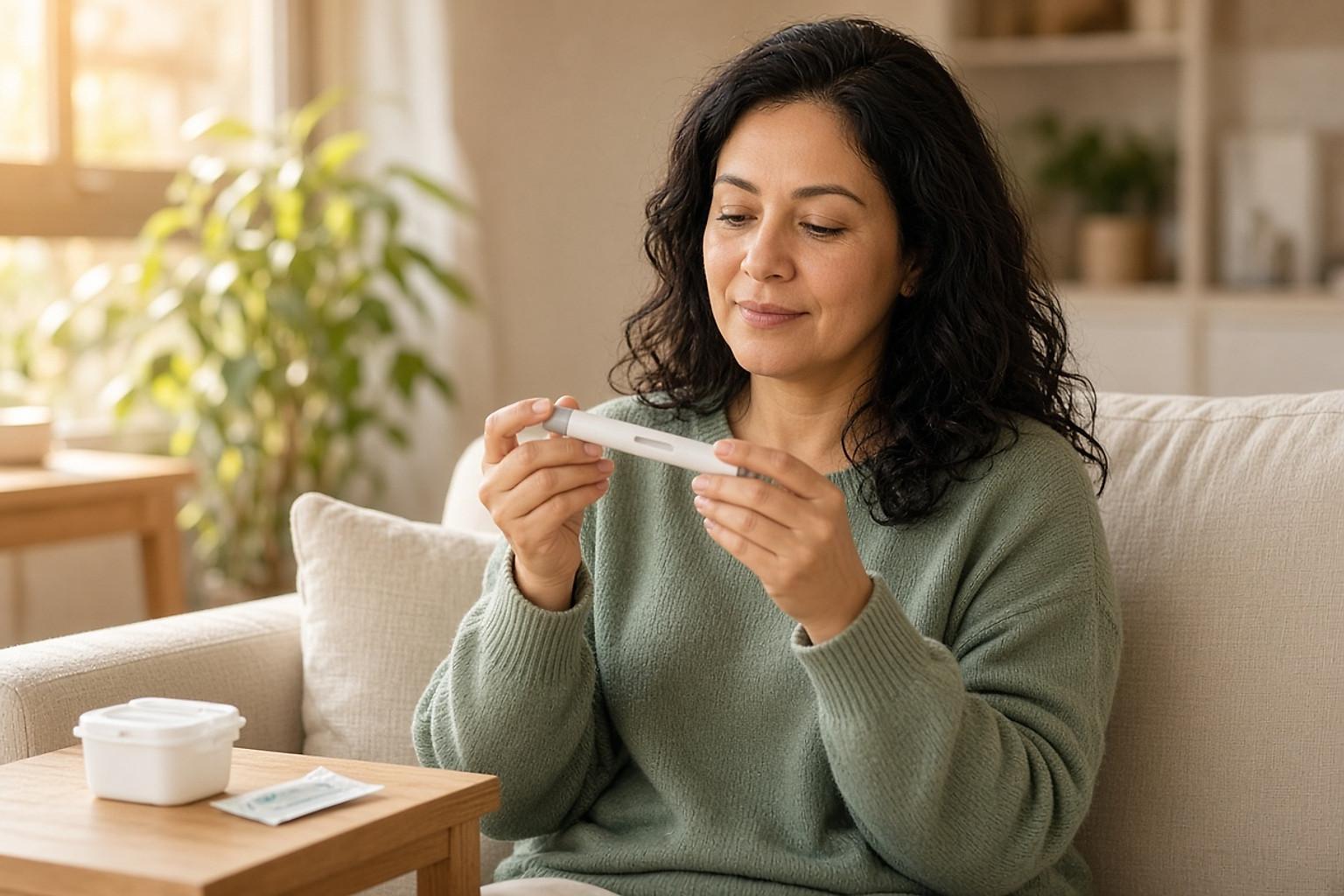
Key takeaways
- The injection is subcutaneous (just under the skin) with a very fine needle; most people describe it as nearly painless.
- The three sites: abdomen (two fingers from the navel), front of the thigh, and back of the arm. Rotate weekly.
- The medication is stored in the refrigerator (36-46 °F / 2-8 °C); never freeze it or leave it in the sun.
- Always use a new needle and dispose of used ones in a rigid sharps container.
Before you start: get everything ready
- Take the medication out of the refrigerator 15-30 minutes before: at room temperature the injection is more comfortable.
- Check the liquid: it should look clear and colorless. If it's cloudy or has particles, don't use it and contact your pharmacy.
- Gather your supplies: syringe or pen, new needle, alcohol wipe, and your sharps container.
- Wash your hands with soap and water.
Where to inject (and why to rotate)
Choose one of the three approved sites: the abdomen (leaving two fingers of distance around the navel), the front of the thigh, or the back of the arm. All work equally well; the key is rotation: change sites (or at least zones within the site) each week to prevent irritation and small lumps under the skin.
Practical tip
Tie the site to the week: week 1 right abdomen, week 2 left abdomen, week 3 right thigh… that makes rotation automatic instead of relying on memory.
The injection, step by step
- Clean the site with the alcohol wipe and let it dry for a few seconds.
- Gently pinch a fold of skin with one hand.
- Insert the needle at a 90-degree angle (45 if you're very lean) with a firm, quick motion.
- Inject the medication slowly; count to 5-10 before withdrawing the needle.
- Withdraw, release the fold, and press lightly with gauze if a droplet appears. Don't rub.
- Place the used needle directly into the sharps container.
Storage and travel
Keep the medication in the refrigerator between 36 and 46 °F (2-8 °C), away from the freezer and the door if it opens often. For travel, an insulated bag with a cold gel pack keeps the temperature for hours; on planes, always in your carry-on. Check your pharmacy's specific guidance on how long it can stay at room temperature.
Nervous about needles? It's more common than you think
The subcutaneous needle is much shorter and finer than vaccine needles. If it's still hard: ice the site for 1-2 minutes beforehand, breathe deeply and exhale as you insert, and look at a fixed point instead of the needle. After 2-3 weeks, for the vast majority it becomes a 30-second routine.
Frequently asked questions
Most people report minimal or no discomfort: the needle is very fine and short. Occasional slight stinging is normal and passes in seconds; injecting the medication at room temperature reduces it.
Small bruises happen and resolve on their own. Lumps usually indicate lack of rotation or a too-shallow injection; rotate the site and avoid that area until it disappears. If there's intense pain, warmth, or spreading redness, contact your provider.
Yes, with or without food. What matters is the same day each week; choose the time that fits your routine best and keep it.
References
Ready to take the first step?
Complete your medical evaluation in under 3 minutes. A licensed provider reviews your eligibility.
This content is for informational purposes only and is not a substitute for professional medical advice, diagnosis, or treatment. Always consult your healthcare provider with any questions about a medical condition.
Related articles
Semaglutide10 min read
Semaglutide: a complete guide to getting started
Semaglutide6 min read
Semaglutide dosing: how titration works step by step
Weight Loss9 min read
GLP-1 side effects: what to expect and how to manage them