
Nutrition5 min read
Alcohol and GLP-1s: what you need to know
Many patients notice they lose interest in alcohol. How drinking interacts with your treatment, why your tolerance changes, and what precautions to take.
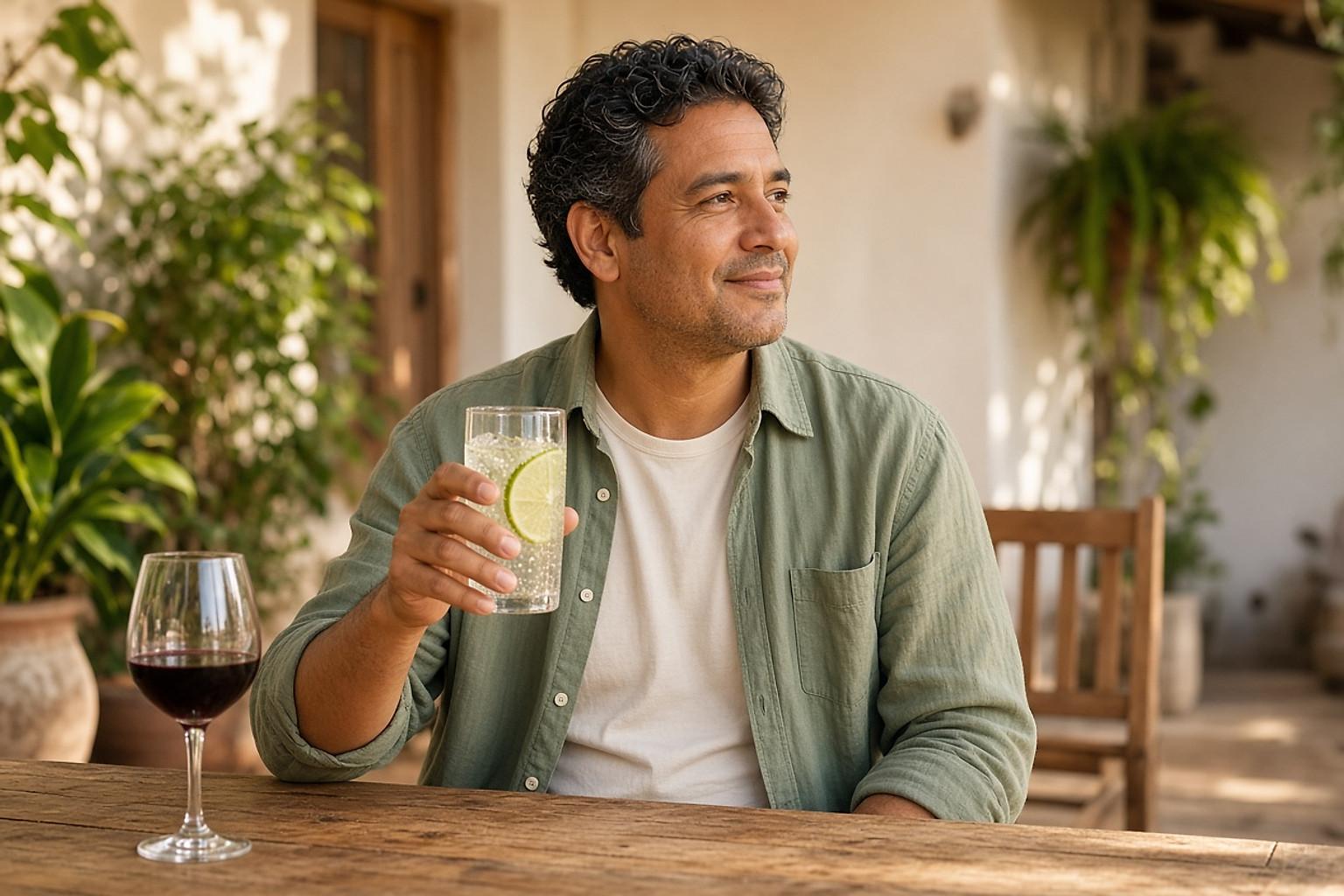
Key takeaways
- Alcohol can intensify nausea and digestive discomfort, especially on days near your dose.
- Many patients report less desire to drink: GLP-1s seem to reduce the reward associated with alcohol.
- With less food in the stomach, alcohol can affect you faster and lower your glucose.
- There's no absolute ban, but moderation and hydration are key.
How alcohol interacts with your treatment
Alcohol and GLP-1s share territory in the digestive system. With slower gastric emptying and smaller portions, a drink can feel stronger and discomfort like nausea or heartburn can appear, especially in the days after the injection. Alcohol also adds empty calories that compete with your goals.
The surprise effect: less desire to drink
A growing number of patients report that, on treatment, they simply stop wanting to drink. Early research suggests that GLP-1s modulate the brain's reward circuits — the same ones that make alcohol appealing — reducing its “pull.” It's an active and promising area of study.
Watch your glucose
Alcohol can lower blood sugar, and with less food the effect is amplified. Avoid drinking on an empty stomach and, if you take other glucose medications, consult your provider.
Practical precautions if you decide to drink
- Avoid injection days and the next day, when digestive discomfort is more likely.
- Never on an empty stomach: eat something with protein first.
- Hydrate: a glass of water between each drink reduces nausea and hangover.
- Choose low-sugar options and moderate the amount; a drink feels different than before.
- Listen to your body: if you notice alcohol hits you worse, it's a signal, not a coincidence.
Frequently asked questions
There's no absolute ban for most people, but with moderation and caution. Alcohol can worsen nausea, lower glucose, and add calories. Discuss your case with your provider, especially if you take other medications.
It's an effect reported by many patients and under study: GLP-1s seem to reduce the brain reward associated with alcohol. It doesn't happen to everyone, but it's common and generally welcome.
In moderation, not necessarily, but it adds empty calories, can increase appetite, and affect sleep. Reducing it usually speeds up results and improves how you feel.
References
Ready to take the first step?
Complete your medical evaluation in under 3 minutes. A licensed provider reviews your eligibility.
This content is for informational purposes only and is not a substitute for professional medical advice, diagnosis, or treatment. Always consult your healthcare provider with any questions about a medical condition.
Related articles
Weight Loss9 min read
GLP-1 side effects: what to expect and how to manage them
Nutrition8 min read
What to eat during your GLP-1 treatment (and what to avoid)
Weight Loss5 min read
“Food noise”: what it is and why GLP-1s silence it